
General Dynamics Mission Systems brings advanced space communications, ground systems integration, and secure data transmission technologies to more than 400 space missions. The company builds crucial infrastructure for scientific exploration and national defense space efforts.
General Dynamics Mission Systems works as a major contractor for space communications and ground systems integration. Over the years, they’ve supported more than 400 space missions.
Their main focus areas include satellite mission payloads with digital communications systems. These payloads handle tricky RF communications and signal processing for advanced missions.
Ground systems management stands out as another big capability. The company designs and runs ground-based infrastructure that keeps satellite networks operating day to day.
General Dynamics also delivers spaceborne encryption technology. Their high-speed encryptors keep satellite data safe from unauthorized access during transmission.
The Space Development Agency picked General Dynamics for a $324.5 million contract supporting low Earth orbit constellations. This seven-year deal covers ground systems operations and network management for the National Defense Space Architecture.
S-Band Transponders are a hallmark of General Dynamics’ space communication tech. These devices form the main link between spacecraft and mission control back on Earth.
Their transponders made historic missions possible. They carried Neil Armstrong’s first words from the moon during Apollo 11 and still support Artemis missions today.
General Dynamics recently rolled out PhantomLink free space optics. In tests at Fort Huachuca, Arizona, PhantomLink hit a 52-kilometer communication link with data rates up to 10 Gbps.
PhantomLink offers high-quality data transport, video, and voice comms. It gives users an alternative to traditional radio communications for tactical needs.
Advanced digital payloads now come with on-board software update features. Operators can tweak satellite functions after launch, no hardware changes required.
General Dynamics has built long-lasting partnerships with NASA over decades of space exploration. The company made S-Band transponders and emergency radios for the Orion spacecraft used in Artemis I.
Their communication systems keep astronauts connected to mission command centers throughout flights. NASA depends on General Dynamics tech for both crewed and robotic missions.
U.S. military collaboration centers on developing national defense space architecture. General Dynamics works with the Space Development Agency to build integrated ground systems for military satellite constellations.
Recent contracts include the Proliferated Warfighter Space Architecture ground management program. This project supports space-based defense with advanced satellite networks.
The U.S. Space Force teams up with General Dynamics for resilient GPS satellite tech. These systems deliver secure navigation capabilities for military operations worldwide.
General Dynamics Mission Systems has crafted communications technology for over 400 space missions with NASA and the U.S. military. They build the links that connect spacecraft to Earth and make deep space exploration possible.
General Dynamics Mission Systems acts as a primary contractor for NASA’s most important space communications projects. They build S-Band transponders that create the vital links between spacecraft and mission control on Earth.
For NASA’s Artemis program, General Dynamics built the S-Band transponders and emergency radios for the Orion spacecraft. These systems will keep future astronauts connected to Earth during lunar missions.
They also develop ground systems that manage daily satellite operations. General Dynamics landed a $491.6 million contract from the Space Development Agency to design ground system architecture for low Earth orbit constellation projects.
Space Development Agency contracts include:
General Dynamics creates spaceborne encryption systems that keep sensitive data from satellites and spacecraft secure. Their high-speed encryptors stop critical info from falling into the wrong hands.
General Dynamics built the S-Band transponder that sent Neil Armstrong’s first words from the Moon during Apollo 11. That device was the only communication link between the Apollo 11 crew and Earth.
They’ve supported NASA missions from near-Earth projects to deep space exploration. Their telecom technology now circles multiple planets and beams back images never seen before.
General Dynamics recently wrapped up NASA’s Space Network Ground Segment Sustainment project. The company and NASA teams completed the final lab testing of this crucial ground communications system.
Their engineers design digital payloads for advanced satellite missions that need complex signal processing. These payloads can get software updates while orbiting Earth.
General Dynamics Mission Systems works out of Scottsdale, Arizona, where NASA first picked the division for early space communications systems. That facility still develops tech that survives the harsh conditions of spaceflight.
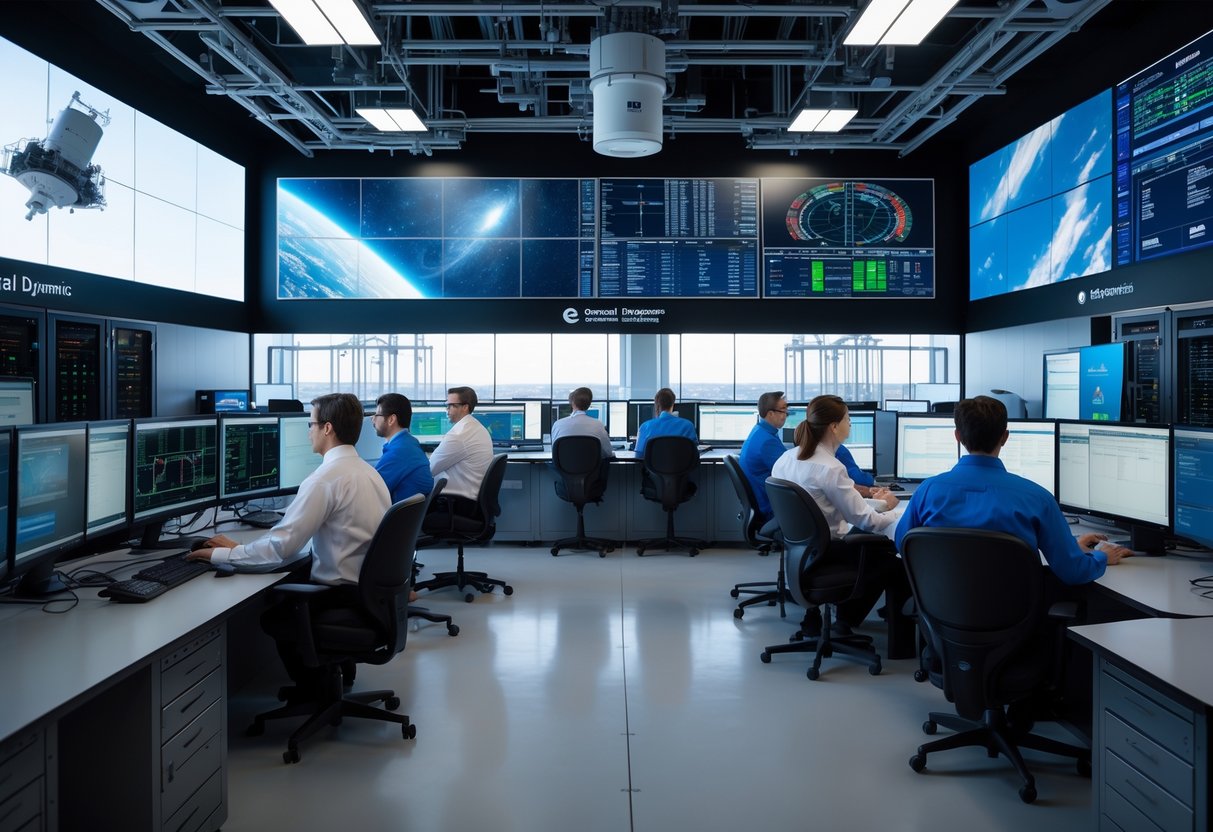
General Dynamics has really made a name for itself in building ground systems that enable smooth satellite operations and mission control. Their work covers satellite ground systems integration, command and control infrastructure, and next-gen ground segment architecture.
General Dynamics Mission Systems runs the ground systems for the Space Development Agency’s low Earth orbit constellation under a $324.5 million contract. They manage network operations for Tranche 1 of the National Defense Space Architecture, working with Iridium Communications.
Their ground systems include ground entry points, operations centers, and enterprise test capabilities. These pieces work together to keep constant communication with satellites in orbit.
General Dynamics provides all the integration, testing, and maintenance services for these critical systems.
Systems engineering keeps satellite communications reliable. Their team monitors and manages networks nonstop to stay mission-ready.
Ground controllers track satellite health, tweak orbital paths, and coordinate mission activities using these integrated systems.
Their command and control infrastructure supports the Proliferated Warfighter Space Architecture through advanced Ground Management and Integration programs. General Dynamics secured a $491.6 million contract to expand this infrastructure for Tranche 2 operations.
Command centers have enterprise integration capabilities that connect multiple satellite constellations. Operators can handle complex space missions from centralized locations with sophisticated control systems.
The infrastructure comes with backup systems and redundant communications pathways to keep things running even if something goes down.
Technical augmentation services add extra engineering support for mission-critical operations. General Dynamics runs design analysis and engineering studies to make sure systems perform well.
Their approach focuses on scalability, so they can handle future missions and growing satellite fleets.
General Dynamics builds Tranche-agnostic ground systems that adapt to different satellite generations and mission types. This flexible setup cuts costs and improves efficiency across multiple programs.
They build on successful Tranche 1 operations to make even better systems.
Modern ground segment architecture uses cloud-based tech and automated systems to streamline operations. Engineers can monitor satellite health and performance metrics remotely, in real time.
Advanced algorithms help predict maintenance needs and optimize resources.
The new architecture supports quick rollout of new features as missions get more complex. Systems engineers focus on modular designs that can take on new tech fast.
This lets ground systems keep up with advancing satellite capabilities and shifting mission needs.
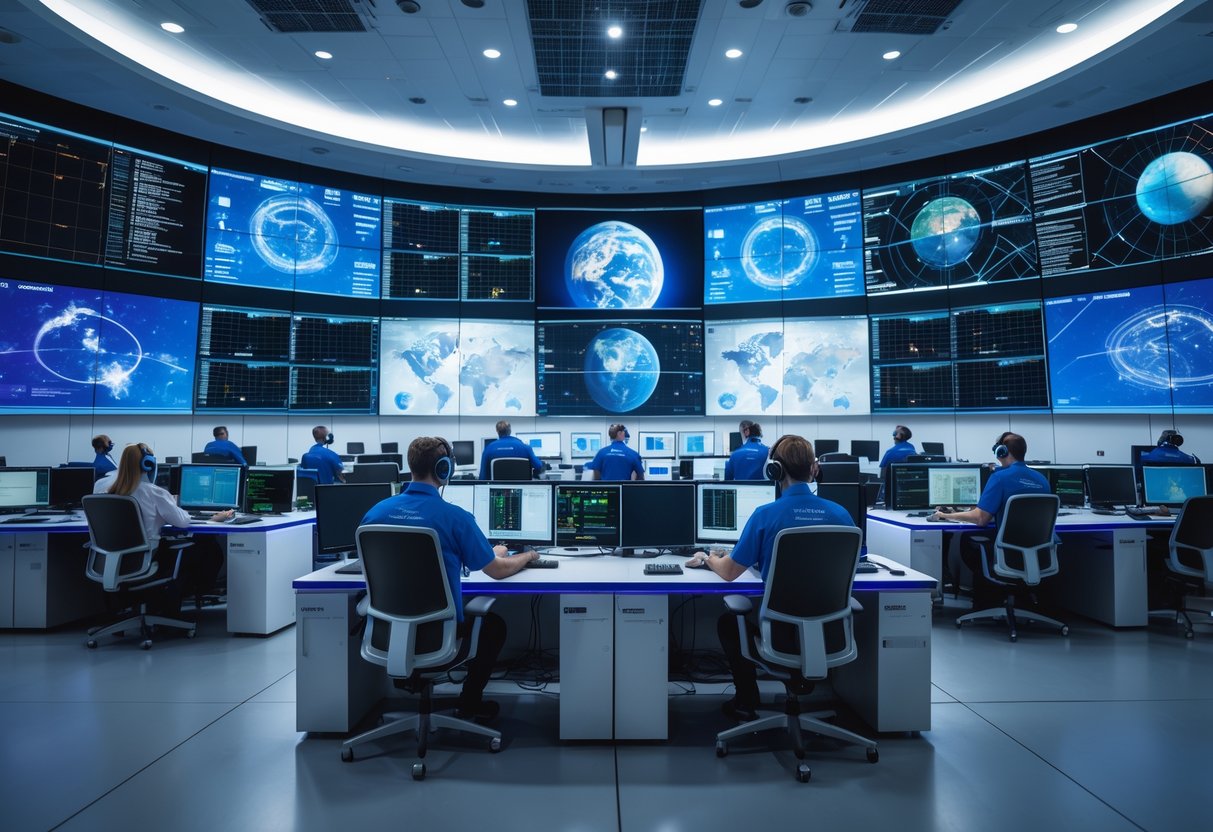
General Dynamics Mission Systems runs high-tech command centers that control spacecraft and manage complex missions around the clock. These facilities blend advanced technology with skilled people to deliver mission-critical operations for defense and commercial space programs.
General Dynamics Mission Systems keeps state-of-the-art operations centers running as the nerve centers for space missions. These places have advanced control systems, communication gear, and monitoring tools needed for spacecraft operations.
Their operations centers have redundant systems and backup capabilities. This setup ensures missions keep going even during equipment hiccups or maintenance.
Each center has multiple workstations with real-time data displays and communication links.
Key Infrastructure Components:
Staff members work in shifts to provide 24/7 coverage for active missions. The centers employ flight controllers, systems engineers, and mission specialists who watch over spacecraft health and performance.
These pros coordinate with ground stations worldwide to maintain constant communication with satellites.
General Dynamics has set up multiple operations centers for different mission types. Some focus on satellite constellation management, while others handle specialized defense missions for the Space Development Agency.
Network operations form the backbone of successful space missions, linking ground systems with orbiting spacecraft through complex communication networks. General Dynamics Mission Systems manages these networks to keep data flowing and commands working.
The company runs ground entry points that act as communication gateways between Earth and space assets. These facilities use high-frequency radio systems and satellite dishes to stay in touch with spacecraft in different orbits.
Network operators monitor signal strength, data quality, and connection reliability throughout each mission.
Network Management Functions:
General Dynamics coordinates network operations across multiple ground stations and partners. This distributed approach gives coverage as spacecraft move across different orbits.
Their network operations center tracks all active connections and manages traffic flow to avoid congestion.
Mission controllers use these networks to send commands to spacecraft and receive telemetry data. The networks also carry payload data, letting scientific instruments and sensors send info back to Earth for analysis.
Mission planning requires careful prep and coordination before spacecraft operations kick off. General Dynamics Mission Systems develops detailed mission plans that factor in orbital mechanics, communication windows, and operational needs.
Planning teams lay out timelines for each mission phase. These schedules cover spacecraft maneuvers, data collection, and communication sessions with ground controllers.
Teams also prepare contingency plans for possible issues or surprises.
Mission Planning Elements:
Readiness assessments check that all systems work properly before missions start. General Dynamics tests ground systems, communication networks, and operational procedures thoroughly.
These tests spot potential issues and give teams a chance to adjust.
The company keeps detailed checklists and procedures for different mission types. Operations teams practice these steps regularly through simulations and training exercises.
This preparation helps everything run smoothly when spacecraft launch and go operational.
Mission readiness also means working with external partners and agencies. General Dynamics coordinates with launch providers, satellite operators, and government agencies to sync activities and avoid conflicts during critical phases.
General Dynamics Mission Systems manages the complex ground infrastructure that links satellites to military users on Earth. The company handles multi-billion dollar contracts with the Space Development Agency and integrates satellites from different manufacturers into unified networks.
General Dynamics has landed several major contracts with the Space Development Agency, together worth more than $800 million. Back in September 2024, they scored a $491.6 million contract for the Ground Management and Integration program.
That deal actually builds on their earlier $324.5 million Tranche 1 Operations and Integration award. General Dynamics runs the ground systems for the National Defense Space Architecture’s low Earth orbit constellation.
These contracts cover design, analysis, engineering studies, and technical support. General Dynamics delivers ground entry points, operations centers, and enterprise test capabilities.
They also manage infrastructure and provide site support across various locations. It’s a lot of moving parts, honestly.
Tranche 2 development ramps these capabilities up even more. The Space Force is planning more sole-source awards for General Dynamics for Tranche 3 ground segment development.
General Dynamics builds unified ground systems that work with satellites from all sorts of manufacturers. Their Proliferated Warfighter Space Architecture ties different satellite types together into a single network.
They’ve teamed up with Iridium Communications to deliver these integrated solutions. That partnership brings General Dynamics’ ground systems together with Iridium’s satellite communications know-how.
Their ground architecture needs to handle satellites with all kinds of specs and capabilities. General Dynamics runs enterprise integration testing to make sure everything works smoothly.
The system supports Tranche-agnostic operations, so it can flex for new satellite generations down the road. That kind of flexibility really cuts costs and makes life easier as new satellites join the mix.
General Dynamics handles critical ground systems and tech support for some of NASA’s biggest missions. Their expertise covers satellite operations for Earth observation programs and deep space telescope support systems.
General Dynamics Mission Systems plays a hands-on role in NASA’s Landsat program, especially with ground system operations and data processing. They manage the core infrastructure that keeps Earth observation rolling for both Landsat 8 and Landsat 9.
Ground Operations Support
The Landsat missions need 24/7 operational support to stick to their Earth imaging schedules. General Dynamics works with NASA’s Goddard Space Flight Center to keep data collection and distribution running smoothly for scientists all over the world.
Their tech teams keep an eye on satellite health and performance metrics. They also take care of the complex ground station networks that pull in terabytes of Earth observation data every day from both spacecraft.
General Dynamics supports NASA’s James Webb Space Telescope through specialized ground system technologies and mission support services. Their main focus is on data handling systems and operational support for this flagship observatory.
Technical Contributions
The Webb telescope produces a mountain of scientific data that needs advanced ground processing. General Dynamics helps that data reach researchers and astronomers as efficiently as possible.
Their engineers work closely with NASA teams at the Space Telescope Science Institute. They maintain systems that support the telescope’s groundbreaking views of distant galaxies and exoplanets.
General Dynamics Mission Systems is right at the center of building ground infrastructure and secure satellite tech for the U.S. military’s growing space operations. They work directly with the Space Development Agency and U.S. Space Force on key defense communications and classified satellite programs.
The U.S. military depends on General Dynamics Mission Systems for ground infrastructure that supports military satellite networks. The company landed a $491.6 million contract from the Space Development Agency to develop the Ground Management and Integration program.
This contract is all about the Proliferated Warfighter Space Architecture (PWSA). The system links up multiple satellite tranches into one unified network.
General Dynamics builds the ground entry points and operations centers that military personnel use to control these satellites. The Space Force plans to hand out more contracts worth millions for Tranche 3 development.
These ground systems let military commanders communicate across every domain of warfare. The infrastructure supports real-time data sharing between space assets and ground forces.
General Dynamics teams up with other defense contractors on classified military space programs. Sierra Space and General Dynamics recently showed off Resilient GPS technology for the U.S. Space Force.
This system provides backup navigation when standard GPS signals get jammed or attacked. Their collaboration produced all the required GPS navigation signals during testing.
Military units need reliable positioning data even in tough environments. The R-GPS tech helps troops keep navigation capabilities during electronic warfare.
The U.S. Space Systems Command also picked General Dynamics for prototype contracts on missile warning satellite ground systems. These systems spot incoming threats and alert military commanders.
The company’s space tech incubator, Frontiers, develops next-gen capabilities for military space missions.
Systems engineering lays the groundwork for successful space missions by tackling tough technical challenges and making sure all the moving parts fit together. General Dynamics uses rigorous engineering processes to deliver mission-critical satellite payloads and spacecraft systems.
Space systems engineering faces unique obstacles that need specialized solutions. The harsh environment of space means extreme temperature swings, radiation, and vacuum conditions that can wreck equipment.
Engineers design redundant systems to avoid single points of failure. Weight restrictions force teams to balance what goes up with how much it weighs, since every pound costs a fortune to launch.
Communication delays between Earth and spacecraft make real-time control tricky. Engineers add autonomous decision-making capabilities to satellites and probes so they can handle surprises.
General Dynamics tackles these problems through tons of testing and simulation. Their teams validate designs in thermal vacuum chambers and radiation facilities before anything launches.
Mission-critical parts go through multiple rounds of qualification testing to make sure they’re reliable. Power management is another big challenge.
Solar panels have to generate enough electricity, and batteries need to keep things running during eclipses. Systems engineers calculate power budgets down to the milliwatt to make sure nothing falls short.
Systems integration brings hardware, software, and human elements together into working space systems. General Dynamics sticks to proven methods to manage complex spacecraft development.
It all starts with requirements analysis—engineers define what the mission needs and the technical specs. Teams create detailed interface documents to spell out how components will talk to each other.
Design reviews happen at different stages to catch issues early. Engineers check thermal models, structural analysis, and electrical interfaces before manufacturing kicks off.
Each subsystem goes through independent testing before integration. Assembly and test phases unite components in controlled environments.
Clean rooms protect sensitive gear from contamination, and technicians follow precise steps. General Dynamics keeps dedicated integration facilities where teams run system-level testing.
Spacecraft face vibration testing, thermal cycling, and electromagnetic compatibility checks. Flight software gets a workout with automated test suites.
Final verification confirms everything meets mission requirements before shipping to launch sites.
General Dynamics uses advanced artificial intelligence and solid cybersecurity protocols to defend space assets from digital threats. The company runs automated monitoring and tough defense systems across satellite networks and ground control.
General Dynamics bakes machine learning algorithms into satellite operations for autonomous threat detection and response. These AI systems keep an eye on space assets 24/7, spotting weird behavior or communication glitches without needing a human to step in.
Their automated systems process loads of telemetry data from multiple satellites all at once. AI can predict equipment failures before they happen, so teams can do maintenance early and stretch out mission lifespans.
Autonomous Decision-Making lets satellites tweak their operations during cyberattacks or when communication drops out. These systems keep missions going even if ground control loses contact.
Ground control centers use AI-driven analytics to fine-tune satellite positions and data transmission schedules. This tech cuts operational costs and boosts mission effectiveness for both defense and commercial space programs.
Space systems face cybersecurity challenges that need special protection. General Dynamics builds multi-layered security architectures to guard satellites from jamming, spoofing, and cyber intrusions.
Their cybersecurity solutions include encrypted communication links between ground stations and satellites. These secure channels block unauthorized access to command systems and keep sensitive mission data safe.
Quantum-resistant encryption helps space assets get ready for future threats from advanced computing. General Dynamics is developing these new security measures as cyber threats keep evolving.
Real-time monitoring systems flag unusual network activity across satellite constellations. Security teams can quickly isolate compromised systems, stopping attacks from spreading to other assets or ground sites.
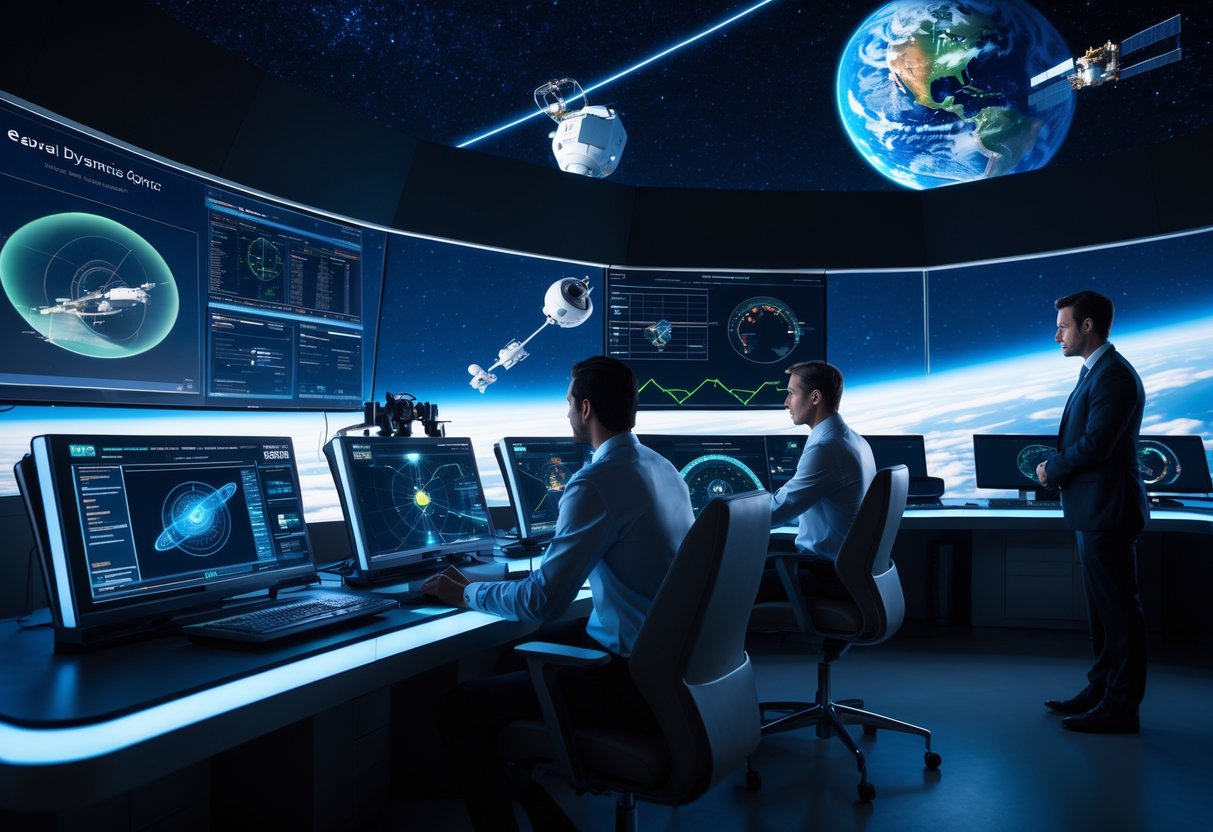
General Dynamics brings machine learning and data processing into spacecraft operations and mission planning. These technologies help with real-time decisions and improve communication systems across a bunch of space missions.
General Dynamics develops machine learning technologies for mission-critical space operations. Their Deep Learning Analytics Center of Excellence creates systems for threat detection and solving tough problems in space.
Spacecraft Communication Systems get a boost from AI-powered signal processing. General Dynamics built the S-Band Transponders for NASA’s Orion spacecraft, using smart algorithms to keep astronauts connected with mission control.
Mission Planning Applications include automated scheduling and resource management. Machine learning crunches orbital mechanics and environmental data to optimize spacecraft routes and fuel use.
Their AI systems help with real-time anomaly detection during missions. These technologies track spacecraft health and performance, flagging problems before they get serious.
General Dynamics also applies machine learning to payload management systems. This tech coordinates complex RF communications and signal processing across satellite networks and deep-space missions.
General Dynamics moves huge volumes of space mission data through some pretty advanced analytics platforms. Their systems take in telemetry, scientific measurements, and all kinds of communication data from more than 400 space missions they’ve already wrapped up.
Ground System Operations depend on data analytics to keep daily satellite network activities running smoothly. General Dynamics designs next-gen ground systems that process real-time data streams from multiple spacecraft at once.
Spaceborne Data Processing packs a punch with on-board analytics systems. Their digital payloads crunch numbers right in space, so they don’t need to send massive data dumps back to Earth.
Mission Data Security mixes analytics with strong encryption. General Dynamics builds high-speed encryptors to protect sensitive mission data, and they keep up with the processing speeds real-time ops demand.
Their analytics systems help with predictive maintenance for spacecraft. Data processing algorithms look for performance patterns and flag when equipment might need service or replacement during those long-haul missions.
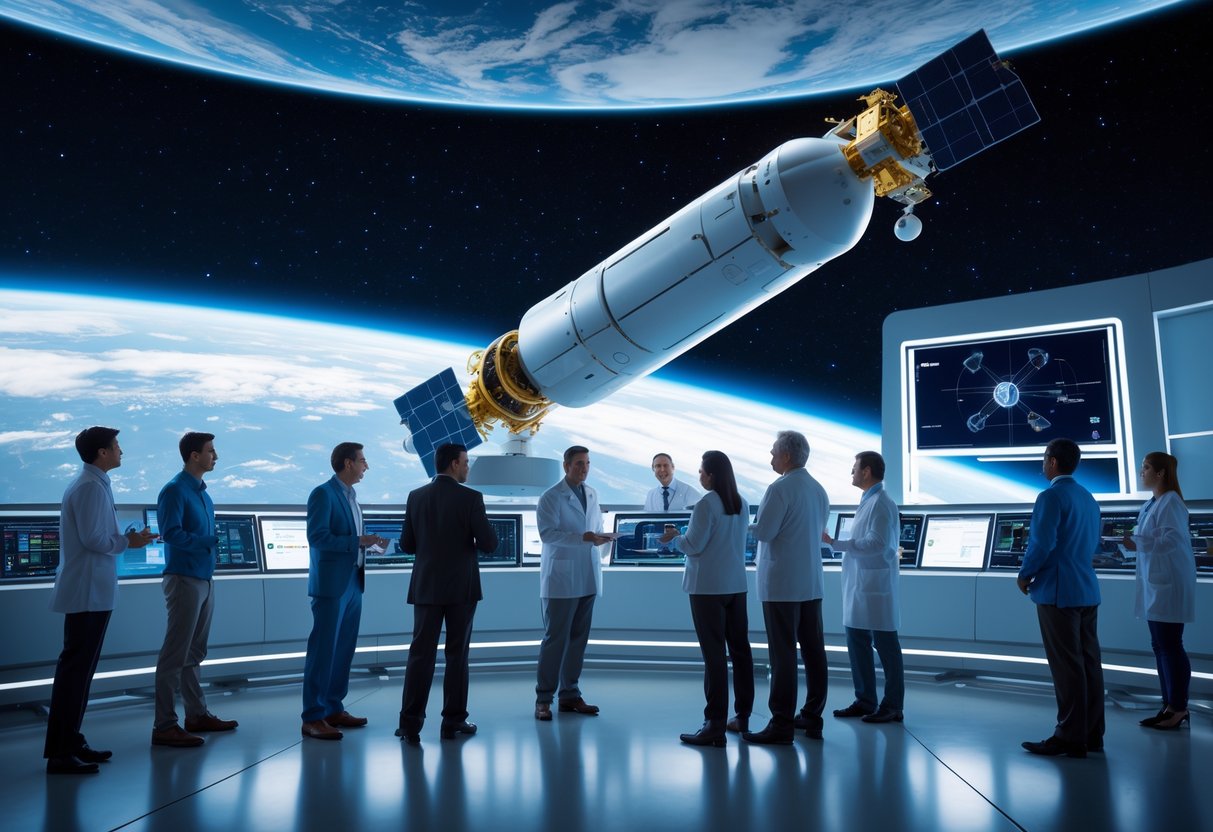
General Dynamics teams up in strategic alliances with NASA and international space organizations. They support scientific missions and bring ground systems tech to global space exploration projects.
General Dynamics keeps active partnerships with NASA through different programs and technical efforts. Their Mission Systems division works side by side with NASA’s Goddard Space Flight Center on communications and navigation.
NASA leans on General Dynamics for ground systems integration. Together, they focus on data relay systems and satellite communications networks.
These collaborations help both crewed missions and robotic exploration. General Dynamics delivers critical infrastructure for NASA’s deep space comms.
Their engineers join NASA teams to build next-gen tracking systems. These joint projects boost mission reliability and improve how data gets sent back.
NASA sees value in General Dynamics’ military space experience. The company adapts defense tech for civilian space, which definitely helps cut costs while keeping performance high.
General Dynamics works with international space agencies on collaborative ground systems. They partner with KSAT (Kongsberg Satellite Services) to offer global satellite tracking.
International partnerships let General Dynamics operate outside the U.S. They support European Space Agency missions with their ground station networks.
These relationships strengthen allied space capabilities and make info sharing a lot easier. General Dynamics delivers mission-critical services for commercial satellite operators worldwide.
Their ground systems keep telecommunications and Earth observation satellites connected. Their clients range from government agencies to private companies.
The firm’s global partnerships create backup communication paths. This strategy bumps up mission success rates for international space ops.
General Dynamics runs facilities that serve several countries and organizations at the same time.
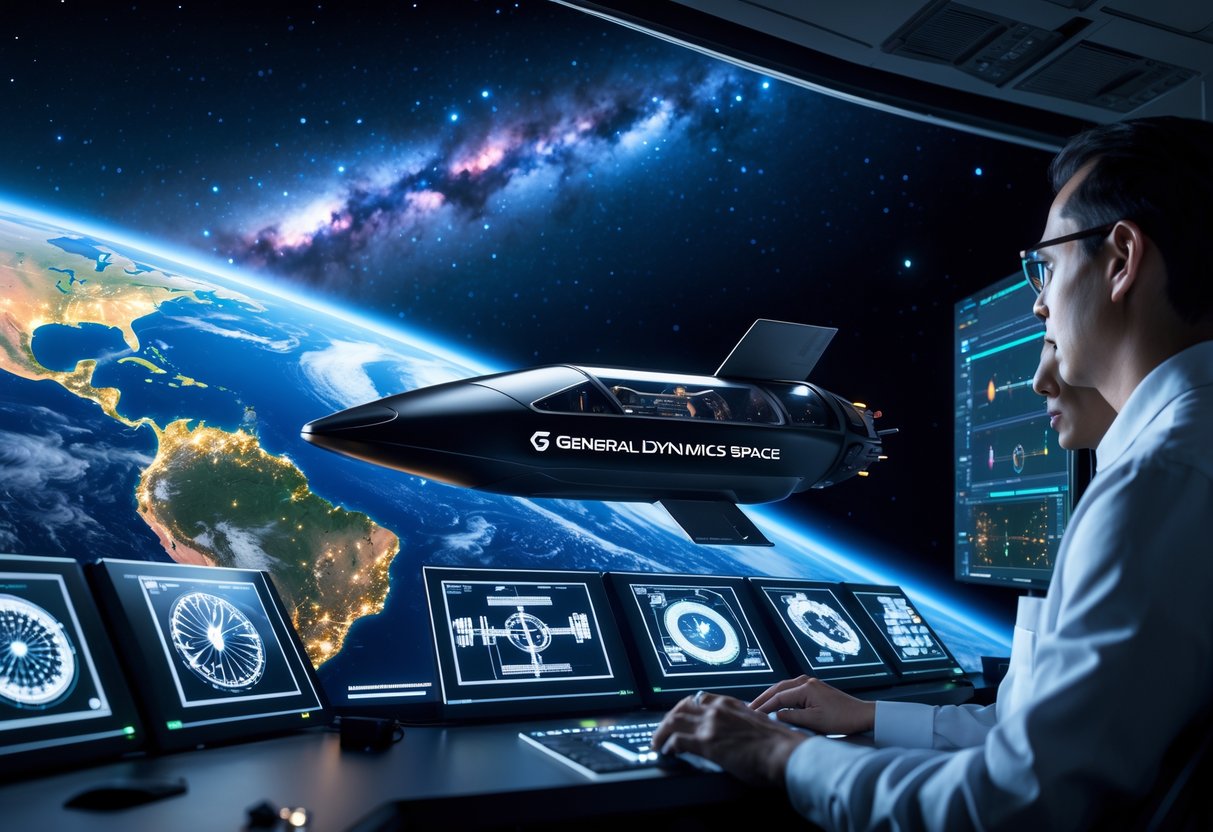
General Dynamics keeps growing its space portfolio, focusing on advanced ground system tech and new mission architectures. Their strategy really zeroes in on next-gen satellite communications and solid support for warfighters.
General Dynamics develops ground systems that don’t care about satellite tranche—they just adapt. Their Ground Management and Integration program builds flexible infrastructure that can handle different mission types and orbital platforms.
Their telecom tech already works around several planets. With all that experience, they’re set to push space-based communication networks further, for both military and commercial needs.
Key tech developments:
The Space Development Agency taps General Dynamics to build scalable ground infrastructure. This setup lets them quickly roll out new capabilities without having to start from scratch.
General Dynamics partners with companies like Iridium, blending satellite know-how with ground system integration. These team-ups help speed up new tech and cut down deployment times.
The Proliferated Warfighter Space Architecture is General Dynamics’ biggest growth area right now. This program needs comprehensive ground management for distributed satellite networks that support national defense.
Space Force keeps awarding them sole-source contracts for Tranche 3 development. These long-term deals show real confidence in General Dynamics’ ability to deliver on tough space systems.
Current mission expansion:
| Mission Type | Contract Value | Timeline |
|---|---|---|
| Ground Infrastructure | $491.6 million | Multi-year |
| Operations Integration | $162.9 million baseline | 7 years |
| Sustainment Support | $17.5 million increase | Ongoing |
General Dynamics supports more than 400 space missions with NASA and military partners. This track record gives them the chops to handle more complex missions across different domains.
Their mission systems division employs over 12,500 people worldwide. This team backs up expanded work in space warfare, intelligence, and scientific discovery.
General Dynamics plays a key role in space missions with their communication systems, encryption tech, and satellite payloads. They support NASA programs and national security space ops with flight hardware that’s been proven in the field.
General Dynamics mainly focuses on three areas for space tech. They engineer digital payloads for complex RF communications and signal processing systems.
These payloads support advanced satellite missions that need real-time software updates. Communication transponders are another big research focus.
General Dynamics builds S-Band transponders to connect spacecraft with mission control on Earth. These systems have supported missions from Apollo 11 all the way to Artemis.
Spaceborne encryption tech rounds out their top research areas. The company develops high-speed encryptors to protect data sent from satellites and spacecraft.
These encryptors keep critical mission info safe from interception.
They provide secure communication systems for military and intelligence space operations. Their encryption tech protects classified data moving between satellites and ground stations.
This capability supports national security missions that can’t risk leaks in space-based comms. General Dynamics builds communication gear for U.S. military space programs.
Their transponders and signal processing systems enable secure command and control. They work directly with Space Force and other defense agencies on classified satellite projects.
Ground systems development is another big contribution to national security. General Dynamics creates mission control software and hardware to manage satellite networks.
These systems coordinate daily ops for government satellite constellations.
The Artemis I mission used General Dynamics tech in the Orion spacecraft. The company built S-Band transponders and emergency radios for NASA’s lunar program.
These systems kept Orion talking to mission control during the uncrewed test flight around the moon. Advanced digital payloads are their latest satellite tech.
These systems offer flexible RF communications that you can reconfigure with software updates. Satellite operators can tweak mission parameters without swapping out hardware.
Next-gen ground control systems are another recent development. These platforms manage multiple satellite networks from centralized control centers.
The systems process telemetry data and coordinate satellite ops across different orbits.
NASA has been General Dynamics’ longest-running government partner. Their relationship started with Apollo 11 comms systems and continues today with Artemis.
General Dynamics provides transponders, radios, and ground systems for several NASA programs. The U.S. military is another major government partner.
General Dynamics supports Space Force missions with secure comms and satellite payloads. They also work with Navy and Air Force space programs.
International partnerships take their government relationships beyond the U.S. General Dynamics supplies communication systems for allied nation satellite programs.
These partnerships help run cooperative space missions and shared satellite operations.
Spaceflight-proven designs are the backbone of General Dynamics’ reliability approach. They use hardware that’s already worked in space before.
This experience lowers risk and makes system performance more predictable. They run extensive ground testing before launch.
General Dynamics tests for thermal, vibration, and radiation stress to simulate space conditions. These tests catch possible failures before systems ever leave Earth.
Redundant system architectures give backup for critical functions. Communication systems come with multiple signal paths and backup transponders.
This redundancy keeps missions going even if a primary system fails.
General Dynamics backs NASA’s deep space exploration efforts with some pretty advanced communication tech. They design and build transponders for missions heading to Mars, Jupiter, and honestly, wherever else we might send a probe next.
These systems keep spacecraft connected, even when they’re millions of miles away from Earth. It’s wild to think about the distances involved, but their tech makes it possible.
On the commercial side, satellite communications really get a boost from General Dynamics’ payload technology. They build flexible systems that let a single satellite handle several different communication services.
This approach helps cut down on launch costs. It also means we can get more out of every satellite we put up there.
Space-based internet constellations? General Dynamics has a hand in those, too. Their ground control systems and mission management software keep massive satellite networks running smoothly.
They coordinate hundreds of satellites, making sure global communication coverage actually happens. It’s a big job, but General Dynamics seems ready for it.
