

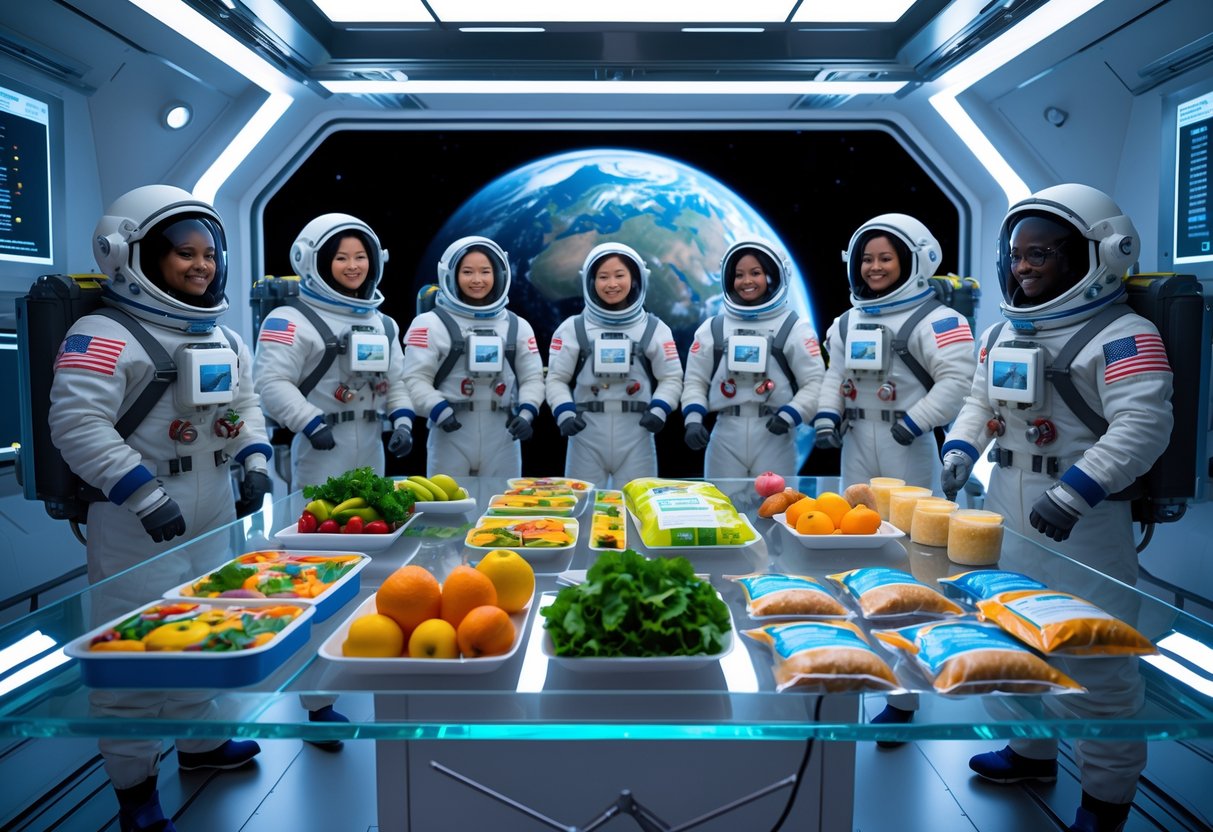
Space tourists run into nutritional challenges that are nothing like what we deal with on Earth. Microgravity messes with how your body handles nutrients, so you’ve got to rethink your macros, vitamins, and even how many calories you need just to stay healthy and enjoy the ride.
Protein needs jump up a lot for space tourists. Microgravity means your muscles start shrinking fast, so you need about 1.2 to 1.4 grams of protein per kilogram of body weight every day—way more than the usual 0.8 grams on Earth.
Carbs should make up 45-65% of your daily calories. You’ll want the kind that’s easy to digest because space activities like EVAs or just moving around the spacecraft can take it out of you.
Fat is still important for hormone production and soaking up nutrients. Aim for 20-35% of your calories from healthy fats, especially omega-3s. They help fight off inflammation from radiation, which, let’s be honest, isn’t something you worry about at home.
Microgravity messes with how your body builds and keeps muscle. Tourists lose muscle within days of launch, so getting enough protein isn’t just a good idea—it’s essential for staying strong and mobile.
Calcium and Vitamin D become much more important in space. You can lose up to 1-2% of your bone mass every month in microgravity, so you’ll need more calcium—think 1,200-1,500mg daily.
Iron needs a close eye. Fluid shifts can hide anemia, especially for women who already need more iron.
B-vitamins matter a lot for energy and brain health. Spaceflight stress ramps up your need for B12, folate, and thiamine.
Antioxidants like vitamins C and E help fight off damage from cosmic radiation. Space tourists should get 200-400mg of vitamin C daily, which is a lot more than what’s recommended on Earth.
Potassium helps keep your heart and muscles working right. You’ll need 3,500-4,000mg each day to keep things balanced.
Microgravity changes how your body absorbs and uses nutrients. Fluids shift toward your head, making your face puffy and often killing your appetite for the first few days.
Digestion slows down a lot in space. Food moves through your system more slowly, which can make it harder to absorb nutrients. Many tourists notice their stomach and gut don’t work quite the same.
Bones break down faster than they rebuild. This speeds up calcium and phosphorus loss, so you’ll need to tweak your diet to slow down bone loss, even on short trips.
Muscle protein builds up slower while breaking down faster, so you lose muscle unless you eat enough protein throughout the day.
Your heart and blood vessels adjust to microgravity, changing how blood flows to your gut. That can mess with how nutrients get delivered to your cells, especially for water-soluble vitamins.
Most space tourists need 2,500-3,000 calories a day, depending on what their mission looks like and how fast their bodies burn energy. Short trips might need fewer calories, but longer missions mean you’ll need to eat more.
How many calories you use really depends on what you’re doing. Suborbital flights don’t change much, but if you’re orbiting for days, you’ll need a full nutrition plan.
Meal timing matters in space. Eating smaller meals more often helps with digestion and can prevent space motion sickness, which is a common problem for first-timers.
Loading up on nutrients before your flight helps you start with full reserves. Focus on complex carbs, good proteins, and healthy fats to prep your body for space.
After landing, recovery nutrition is all about rebuilding what you lost. You’ll need extra protein and vitamins to get your muscles, bones, and body back to normal.
Space food has come a long way. What started as basic survival rations has evolved into surprisingly creative meals that keep people healthy and happy on longer missions. Today’s space food tech tackles the weirdness of eating in microgravity while still making sure folks get what they need.
Space food really got going with the Mercury missions in the early ‘60s. Back then, astronauts squeezed bland purees from metal tubes and chomped on crumbly cubes that made a mess in zero gravity.
The Gemini missions tried gelatin coatings to stop food from falling apart. Freeze-dried meals in plastic containers made things a bit easier. Eating was less terrible, but still not great.
Apollo changed the game with hot water systems. Suddenly, rehydrated meals tasted way better. Spoon-bowls let astronauts actually use utensils—a small but welcome upgrade.
Skylab added more food variety. Frozen foods joined the menu, and astronauts got a real dining area. That made meals feel a bit more normal.
The Space Food Systems Laboratory at Johnson Space Center now creates more than 200 menu options. Modern meals are spiced up to help with the bland taste that comes from fluid shifts in microgravity. Heavier seasoning helps when your sense of taste takes a hit.
Rehydratable foods are the backbone of space meals. Think powdered drinks, soups, and casseroles with all the water removed. Astronauts add water right before eating.
Thermostabilized foods are like fancy military MREs. Heat-processed stews and puddings come ready to eat in pouches or cans—no prep needed.
Intermediate moisture foods keep some water but stay shelf-stable. Dried fruits and jerky are good examples. You just open and eat.
Natural form foods are regular snacks like nuts and granola bars. They give you a taste of home and a bit of comfort. Even cookies show up, though they need to be crumb-free for zero gravity.
Fresh foods come on resupply missions but don’t last long. Fruits and veggies add nutrients and variety, but storage is tight and they spoil fast.
Space food packaging has to do three things: keep food safe, make eating in microgravity possible, and handle waste. Flexible pouches are everywhere because you can squish them down after eating, and they work with water systems.
Rehydration ports let you add water straight into the pouch. That way, water droplets don’t float around and mess up the equipment or annoy everyone.
Thermostabilized containers use either flexible pouches or cans, depending on what’s inside. Heat kills germs but keeps the nutrients. Packages have to survive big temperature swings.
Packaging needs to be tough—no leaks or punctures allowed. Multiple layers keep out moisture and germs. Special adhesives work even in the extremes of space.
Waste matters a lot up there. Compressible packaging saves space after meals. Color-coded wrappers help folks find what they want and know how to prep it.
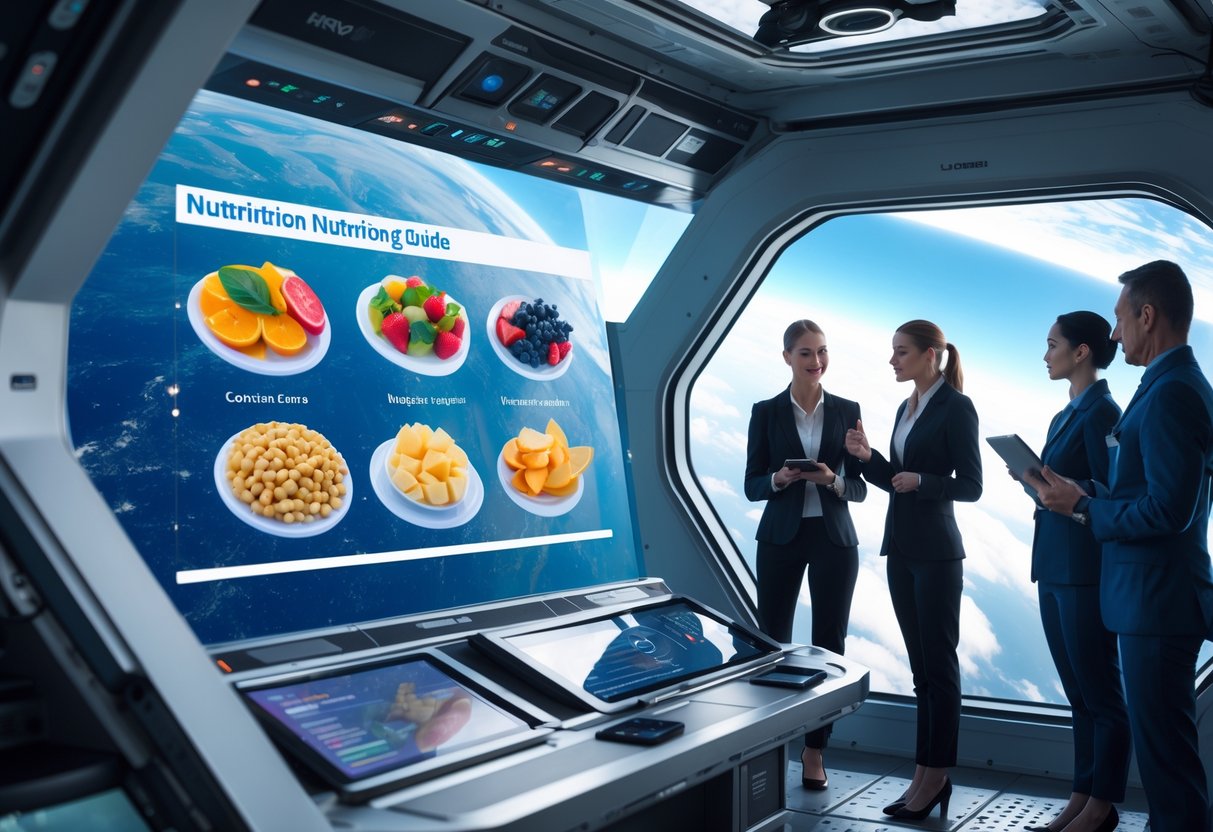
Space tourism companies have to plan menus that work with microgravity and still give people memorable meals. That means personalizing diets, mixing things up, and finding the right balance between flavor and nutrition.
Space tourism operators have a tricky job. Unlike professional astronauts, tourists show up with all sorts of medical needs, allergies, and cultural preferences.
Medical checks now flag passengers with diabetes, celiac disease, or severe allergies before launch. Companies like Virgin Galactic and Blue Origin team up with nutrition experts to tweak standard meals. They swap in rice for wheat for gluten-free folks and follow kosher or halal rules as needed.
Tourist-Specific Modifications:
Before flying, tourists get to try the meals and give feedback. It’s a smart move—better to fix flavor issues on the ground than in orbit.
Short space tourism flights—three to ten days—call for different menus than long astronaut missions. Here, the focus is on meals that make the trip special, not just keeping people going for months.
Virgin Galactic’s suborbital trips offer one specialty meal as part of the adventure. Blue Origin builds on that with multi-day flights and themed dining events. Meals match the moment—launch parties, zero-gravity tastings, and dinners with a view of Earth.
Daily Meal Structure:
SpaceX mixes things up by offering Japanese, Italian, and American dishes, all tweaked for space. This turns dining into a mini world tour.
Rotating menus keep things interesting on longer trips. Companies blend comfort foods with new tastes, so nobody gets bored (or cranky).
Microgravity dulls your sense of taste, so space menus get extra seasoning and bolder flavors. Companies have to make sure these tasty tweaks don’t mess with nutrition, especially since tourists may not be as fit as astronauts.
Space tourists need more calcium and vitamin D to protect bones. Menus sneak in fortified foods and supplements—think chocolate desserts with extra minerals or fruit drinks loaded with vitamins.
Flavor Enhancement Techniques:
Texture matters when food starts tasting bland. Meals include crunchy, smooth, and chewy elements to keep things interesting and practical for zero gravity.
Companies test new menu items on parabolic flights. That way, they see if the flavors hold up in weightlessness. Tourist feedback from these flights shapes the final menu before launch.
Space tourists should drink 2.5 to 3 liters of fluid daily in microgravity—more than you’d need on Earth. Microgravity messes with thirst and causes fluid shifts that change how your body handles water and electrolytes.
Commercial spacecraft come with several water systems for tourists. Virgin Galactic and Blue Origin use pressurized dispensers that can serve drinks anywhere from 70°F to 180°F.
Don’t count on feeling thirsty in space. Gravity’s gone, so your body’s fluid balance gets confused. Most people drink about 20-25% less than they should during their first couple of days up there.
Main water sources:
Space tourism operators set reminders to drink every 30-60 minutes. Passengers get pre-measured servings to help them stay hydrated for the whole flight.
Microgravity pulls fluids up toward the head and chest right away, cutting blood flow to digestive organs by about 15-20%. This shift makes people pee more often, so space tourists can get dehydrated pretty quickly.
Flight crews keep an eye on everyone’s hydration, watching for signs and logging what folks drink. Dehydration hits faster in space, and the symptoms—headaches, dizziness, fuzzy thinking—show up before you might expect.
Effective prevention methods:
Space tourists should ramp up their water intake the day before launch. Pre-hydrating helps make up for the fluids lost during launch and the first hours of adapting to microgravity.
Managing electrolytes gets tricky in microgravity because kidneys work differently and fluids move around in odd ways. Space tourists lose a lot of sodium and potassium through increased urination, especially during the first days in space.
Key electrolyte requirements:
Commercial space food comes with carefully balanced electrolytes. Too much sodium speeds up bone loss and messes with fluid levels in microgravity.
Space tourism companies hand out electrolyte supplements on flights longer than a day. These keep nerves working right and help prevent those muscle cramps that can hit during long stretches in weightlessness.
Space food systems lean heavily on veggies and fruits to provide the nutrients space tourists need to stay healthy. These foods get special processing to keep their nutrition intact and meet spaceflight safety rules.
Fresh fruits and veggies are tough to bring along for space missions—they spoil quickly and take up a lot of storage. Most space food plans stick with freeze-dried or thermostabilized produce, which lasts for months without a fridge.
Freeze-dried strawberries and apples keep most of their vitamins and minerals. Removing water preserves the fruit’s structure. Space tourists can eat them dry or rehydrate them with water.
Thermostabilized veggies like green beans and carrots get heat-treated in flexible pouches. This kills off bacteria and keeps the texture better than freeze-drying. Heat them up and they taste almost like fresh veggies.
Sometimes, missions include a few fresh items for the first days in space. Apples, oranges, and cherry tomatoes can make it a week up there without special storage. Fresh produce can really lift spirits and boost morale.
Veggies and fruits pack phytonutrients that you just can’t get from pills. These compounds help space tourists handle the stress of microgravity and radiation.
Blueberries add anthocyanins, which support brain health and memory. You’ll find freeze-dried blueberries in breakfast mixes and snacks. Studies have shown astronauts on fruit-rich diets do better on cognitive tests.
Dark leafy greens bring folate and vitamin K, both good for bones. Freeze-dried spinach and kale get tossed into soups and pasta dishes. That helps fight off bone loss in microgravity.
Orange and red veggies come loaded with carotenoids for eyes and immune health. Carrots, sweet potatoes, and bell peppers go through processing that actually concentrates these nutrients. Space tourists need a solid immune system to cope with spaceflight stress.
Fish and omega-3 foods pair well with antioxidant-rich produce. Together, they help curb inflammation and keep the heart healthy during missions.
Space food tech is starting to focus on growing fresh produce during longer missions. Small hydroponic gardens can grow leafy greens and cherry tomatoes right on the spacecraft.
LED grow lights give plants the exact light they need for photosynthesis. These lights use little power but boost plant growth. Space tourists on longer trips could harvest fresh lettuce and herbs just weeks after planting.
Microgreens are another win—they pack a lot of nutrition in a tiny package. These young shoots have more vitamins than mature plants, and you can grow them in just a few days.
New packaging keeps processed veggies fresh for ages. Barrier films block oxygen and moisture, so freeze-dried produce lasts for years without losing much nutrition.
Bioregenerative life support systems tie food production to air and water recycling. Plants eat up carbon dioxide and release oxygen while growing food. These closed systems will be crucial for Mars missions and anything beyond.
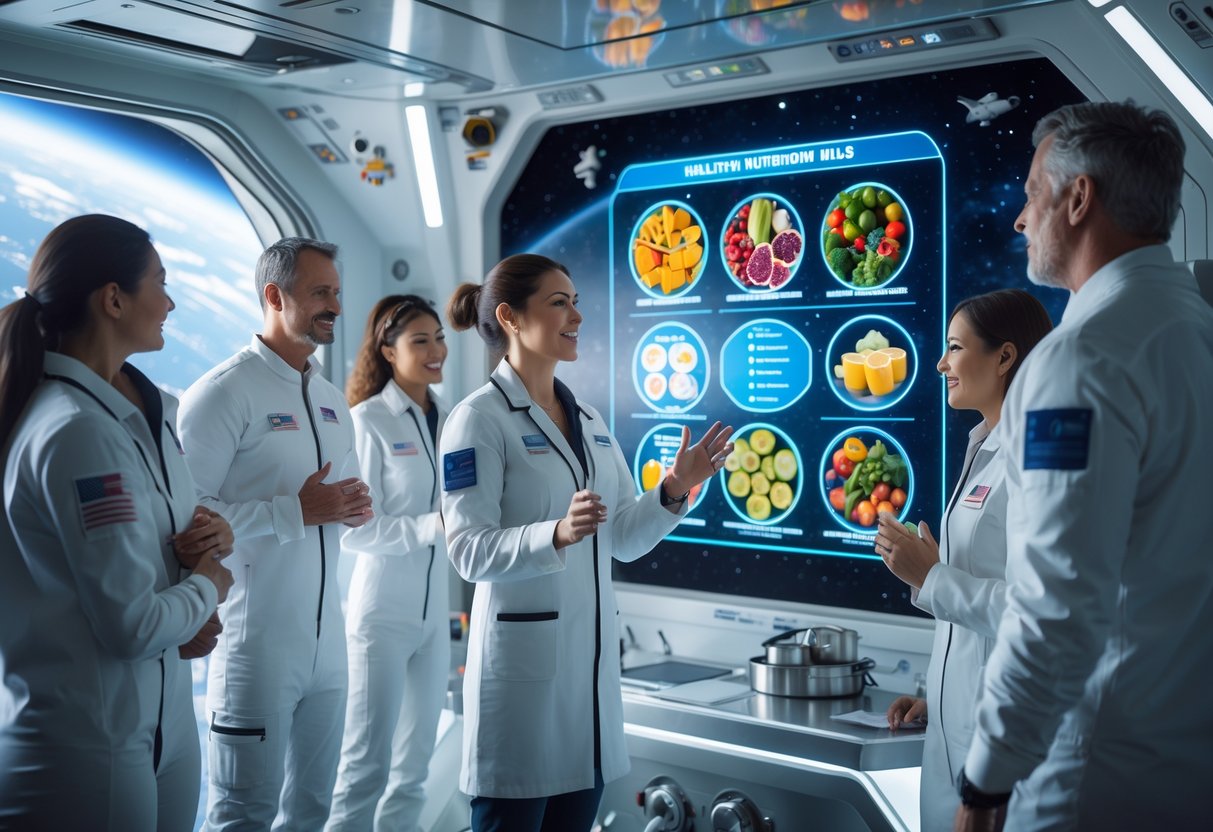
Space tourism brings some weird health challenges that you can actually tackle with the right diet. Smart meal planning helps protect bones, supports immune function when stress is high, and keeps the cardiovascular system stable during launch and microgravity.
Microgravity causes bone density to drop and muscles to waste away fast—sometimes within days. Space tourists need more protein (about 1.2-1.6 grams per kilogram of body weight daily) to slow muscle loss.
Calcium and vitamin D are must-haves since bones lose density ten times faster in space than on Earth. Tourists need 1,200-1,500mg of calcium daily, way more than usual.
Whey, casein, or plant-based proteins work best for keeping muscle. Eating protein every 3-4 hours helps prevent breakdown, even on short flights.
Magnesium is important for both bone and muscle. Tourists should get 400-500mg daily, which you can find in leafy greens, nuts, and whole grains—foods that fit into space menus.
Resistance exercise plus smart nutrition offers the best protection. Even short suborbital flights can trigger changes, but the right diet makes a difference.
Space travel is rough on the immune system—radiation, tight quarters, and stress all play a part. B-vitamin needs go up by 15-25% to keep nerves and metabolism running smoothly.
Antioxidants help battle oxidative stress from cosmic rays. Tourists need 20-40% more vitamins C and E, plus selenium and zinc, than they would on Earth.
Probiotics and prebiotics keep the gut healthy when digestion slows down in space. Fermented foods and supplements help good bacteria thrive, which boosts immunity.
Natural foods give you better antioxidant absorption than pills. Space menus now include more berries, greens, and bright veggies for this reason.
Sleep issues and stress hormones can weaken immunity in space. Omega-3s from fish oil or algae help reduce inflammation and keep immune cells working.
Microgravity moves fluids toward the head, which strains the cardiovascular system. Potassium (3,500-4,000mg daily) helps keep fluids balanced and prevents kidney stones.
Sodium needs to stay low in space. Tourists should keep it under 2,000mg a day, since too much salt speeds up bone loss and messes up fluid balance.
Heart rate and blood pressure can change within hours of reaching space. Staying hydrated with 2.5-3 liters of fluid a day helps the heart adjust, but thirst fades in microgravity, so you have to remember to drink.
Launch and re-entry put a lot of stress on the heart. Magnesium and potassium help keep heart rhythms steady during these intense moments.
The heart deconditions quickly without gravity. Nutrition—protein, electrolytes, antioxidants—helps the cardiovascular system hold up during even short space trips.
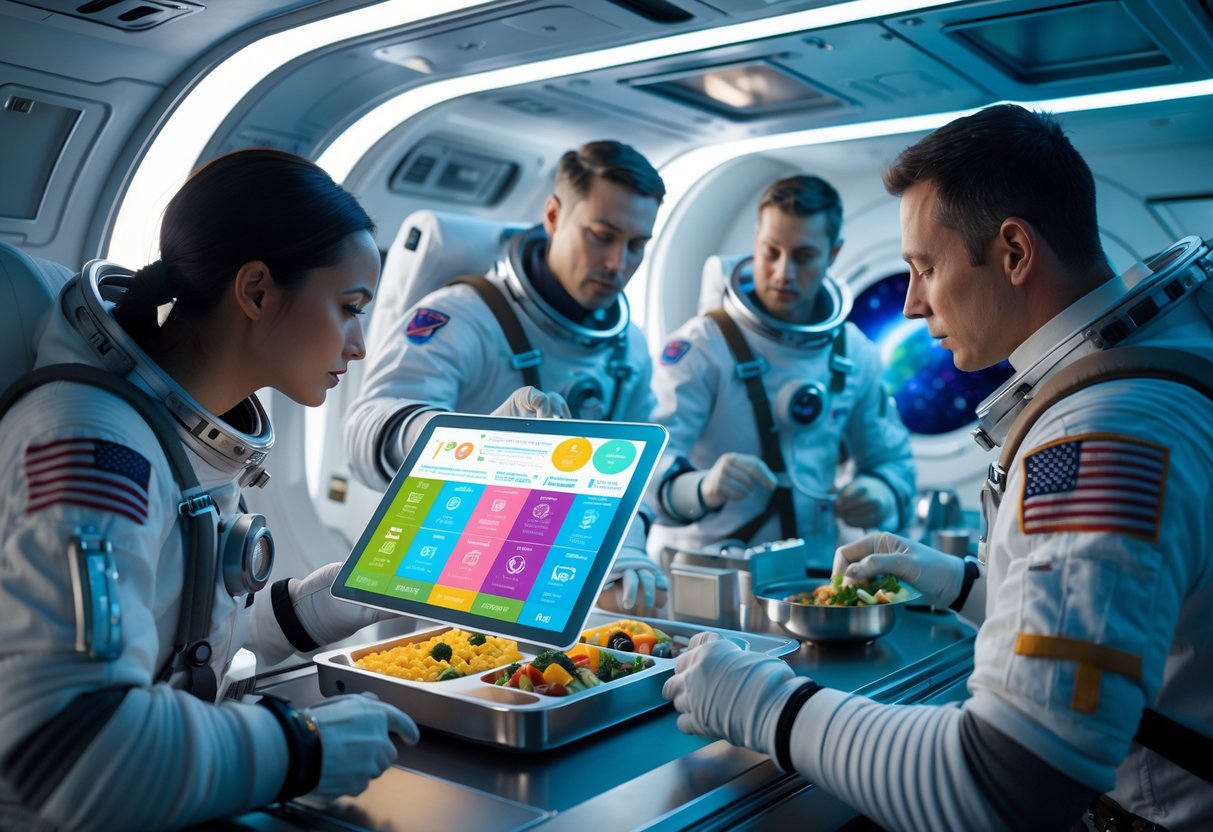
Longer missions need much more than just “enough food.” Menu variety matters for mental health, and the body needs different nutrients to stay healthy over weeks or months.
Space tourists on long missions can get bored and lose their appetite if meals repeat too often. The ISS uses an eight-day rotating menu to help crew avoid the mental fatigue that comes with eating the same food over and over.
Mission planners now build in menu cycling with at least 100 meal choices over several weeks. This variety keeps morale up and makes sure tourists eat enough, even when appetite drops in microgravity.
Flavor is a big deal on long flights. Food scientists boost seasoning by 20-30% because taste buds get dull in space. Hot sauce and bold spices help make meals more interesting when nothing tastes quite right.
Growing fresh greens with hydroponics isn’t just about nutrition—it’s a mental health boost too. Crew members say harvesting and eating fresh food lifts their mood during months-long missions.
Long-term spaceflight changes the body in ways that require special diets. Protein needs go up to 1.2-1.6 grams per kilogram of body weight daily to fight the fast muscle loss in microgravity.
Bone health gets extra attention after 30 days in space. Tourists need 1,200-1,500mg of calcium each day, plus vitamin D, since your body can’t make it without sunlight. Magnesium needs also rise to 400-500mg daily to help bones hold onto minerals.
Antioxidant supplements become more important on long missions because of constant cosmic radiation. Vitamin C and E requirements climb 20-40% above Earth levels to help repair cells.
Metabolic flexibility means eating the right carbs at the right time. Complex carbs like quinoa and oats release energy slowly and help prevent blood sugar swings that make adapting to space even harder.
The International Space Station acts as the main testing ground for space food systems that will support future space tourists. Research on the ISS has led to big improvements in food safety, shelf life, and nutrition for everyone heading to space.
The ISS gives us the only long-term microgravity lab for testing food systems in real space conditions. NASA has used the station to figure out what works for storing, preparing, and eating food—methods that commercial space tourism companies now use too.
Astronauts try foods with shelf lives from 1.5 to 3 years. Their feedback shows how packaging, nutrients, and food safety hold up in space. These results shape how future commercial spacecraft feed their passengers.
Key testing areas include:
The ISS pantry lets crew pick meals as they go, instead of months ahead. This flexibility now influences how space tourism companies plan menus for travelers.
Scientists aboard the International Space Station have driven major improvements in space food technology, and these advances are now making life easier—and tastier—for commercial space travelers.
NASA actually reformulated more than 90 foods, cutting sodium from 5,300 mg per day down to 3,000 mg, all thanks to what they learned on the station.
Crew members helped develop thermostabilized pouches and better freeze-dried foods during station operations. You can really tell the difference—today’s space food tastes better and packs more nutrition, which is a win for space tourists on shorter trips.
Space food systems now use lessons from real astronauts’ dietary studies. Researchers noticed astronauts just don’t eat as much in space, so they adjusted food formulations to encourage better intake.
The station’s food safety protocols—especially the Hazard Analysis Critical Control Point standards—laid the groundwork for commercial space food safety. Space tourism companies trust these rules to keep passengers safe during flights.
Food turns into a social connector during space tourism flights, bringing folks together over shared meals and cultural exchanges.
The dining experience lets travelers bond over familiar flavors and create new memories in a place most people only dream about.
Space tourism companies set up communal dining areas where passengers float together around shared meal spaces.
These spots use magnetic surfaces and handholds so everyone can settle in and eat comfortably with the group.
Virgin Galactic and Blue Origin organize meal times as group activities, not solo affairs. Passengers get to try foods from different cultures, which naturally sparks conversations about home and food traditions.
Cultural food exchanges become highlights on longer flights. Maybe someone from Japan shares miso soup while another traveler introduces space-friendly pasta from Italy.
These moments help break the ice among strangers who just met at the start of the trip.
Companies plan special celebration meals for birthdays, anniversaries, or cultural holidays during multi-day flights.
Crew members often bring out special treats or organize food-sharing events to honor different traditions.
The magnetic dining tables fit several people at once. Travelers attach their food containers and utensils to the same spot, creating a vibe that feels a bit like a family dinner back on Earth.
Eating together eases the isolation and weirdness that many space tourists feel during those first days in microgravity.
Familiar routines around meals help people feel more grounded, even when everything floats.
Stress reduction just happens when folks share meals and talk. Eating familiar foods while chatting with others brings comfort and helps counteract the psychological hurdles of adapting to space.
Shared meals give structure to the day. Passengers look forward to these social breaks, which break up the long stretches of solo activities like Earth-gazing or tinkering with experiments.
The group dining experience helps everyone process their space adventure together. People compare notes on how foods taste different in microgravity or laugh about learning to drink from pouches without making a mess.
Emotional support comes naturally at group meals. Nervous or overwhelmed passengers often find comfort in casual conversations over food.
Sometimes these chats spark friendships that last long after landing.
Companies say passengers who join group meals rate their overall space experience higher than those who eat alone. The social side of dining turns what might be a technical demo into something deeply human.
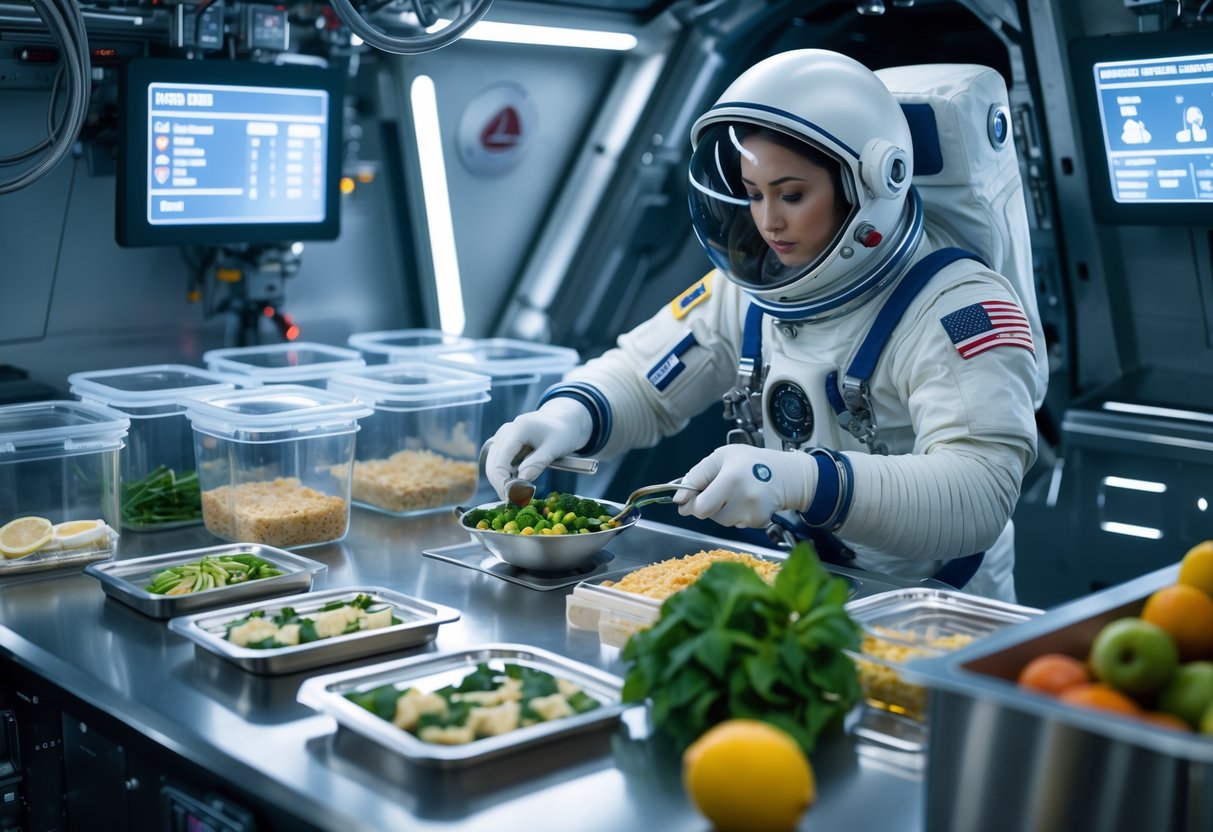
Space food safety depends on strict protocols to protect tourists from microbes that behave unpredictably in zero gravity.
Good sanitation keeps meals safe for the entire flight.
Microgravity throws some curveballs for food safety you just don’t see on Earth.
Bacteria can grow faster and get nastier in space.
Harmful microbes like E. coli and Salmonella threaten space tourists because they multiply quickly in a closed spacecraft.
Gravity’s absence even makes bacteria tougher to kill.
Before launch, space food goes through intense processing to wipe out dangerous microbes. Thermostabilized foods get heated to high temps to kill bacteria.
Freeze-dried meals take out the moisture bacteria need to survive.
Irradiation technology zaps harmful microbes in space food without messing with taste or nutrition.
This process uses controlled radiation to kill pathogens while keeping food safe. Many space foods get this treatment before packaging.
Critical control points track food safety during prep and storage. Temperature logs show if food stays in the safe zone.
Regular testing checks for bacteria before meals ever reach tourists.
Space agencies require all space food to stay safe for at least five years. That long shelf life matters for missions to Mars or beyond.
Proper cleaning stops contamination during food prep and eating.
Space tourists have to follow strict hygiene rules to avoid getting sick.
Hand sanitization is a must before touching any food. Alcohol-based cleaners kill germs without needing water, which just floats away in zero gravity.
Antimicrobial wipes are there for backup.
Food prep surfaces get a thorough disinfecting between uses. Special cleaning solutions work in microgravity—they don’t make floating droplets that could mess up other areas.
Waste management really matters, too.
Food scraps and packaging get sealed up right away to stop bacteria from growing.
Proper disposal systems contain waste for the whole flight.
Water for rehydrating space food goes through several filtration steps. UV sterilization kills any leftover microbes in the water supply.
That way, reconstituted meals stay safe.
Space tourism companies train passengers on food handling before launch. They cover storage, contamination prevention, and more.
These steps protect everyone on board.
New space food systems depend on self-sustaining ecosystems that cut waste and make the most of every resource.
Commercial space tourism operators are building closed-loop environments where veggies and fruits grow year-round, and waste gets recycled into resources for future crops.
Commercial space habitats run as complete ecosystems where nothing goes to waste.
These sealed setups mix advanced hydroponics with atmospheric recycling to create self-sufficient food systems.
Space tourists enjoy fresh vegetables and fruits grown in tightly controlled conditions.
LED lighting arrays adjust their colors to boost plant growth and save energy. Automated nutrient systems keep an eye on soil and tweak minerals as needed.
The biosphere approach combines air purification with food production.
Plants take in passengers’ carbon dioxide and give back oxygen and fresh food at the same time.
This double-duty design cuts down on the weight needed for separate life support systems.
Key biosphere components include:
Space food systems squeeze every bit of value from organic waste.
Food scraps turn into compost for growing systems, and packaging gets reused for construction or storage.
Advanced processors break down organic waste in just 24 hours. These units use controlled decomposition to make nutrient-rich soil for veggies and fruit.
The process wipes out odors and pathogens while saving nutrients.
Modern space habitats recycle up to 95% of their water. Every drop from food prep, eating, and plant watering gets cleaned and reused.
This closed-loop approach means fewer resupply missions for long journeys.
Packaging is getting smarter, too. Edible and biodegradable materials are in—think seaweed-based films and potato starch polymers.
Space tourists can even eat their food containers or compost them, which solves a lot of disposal headaches.
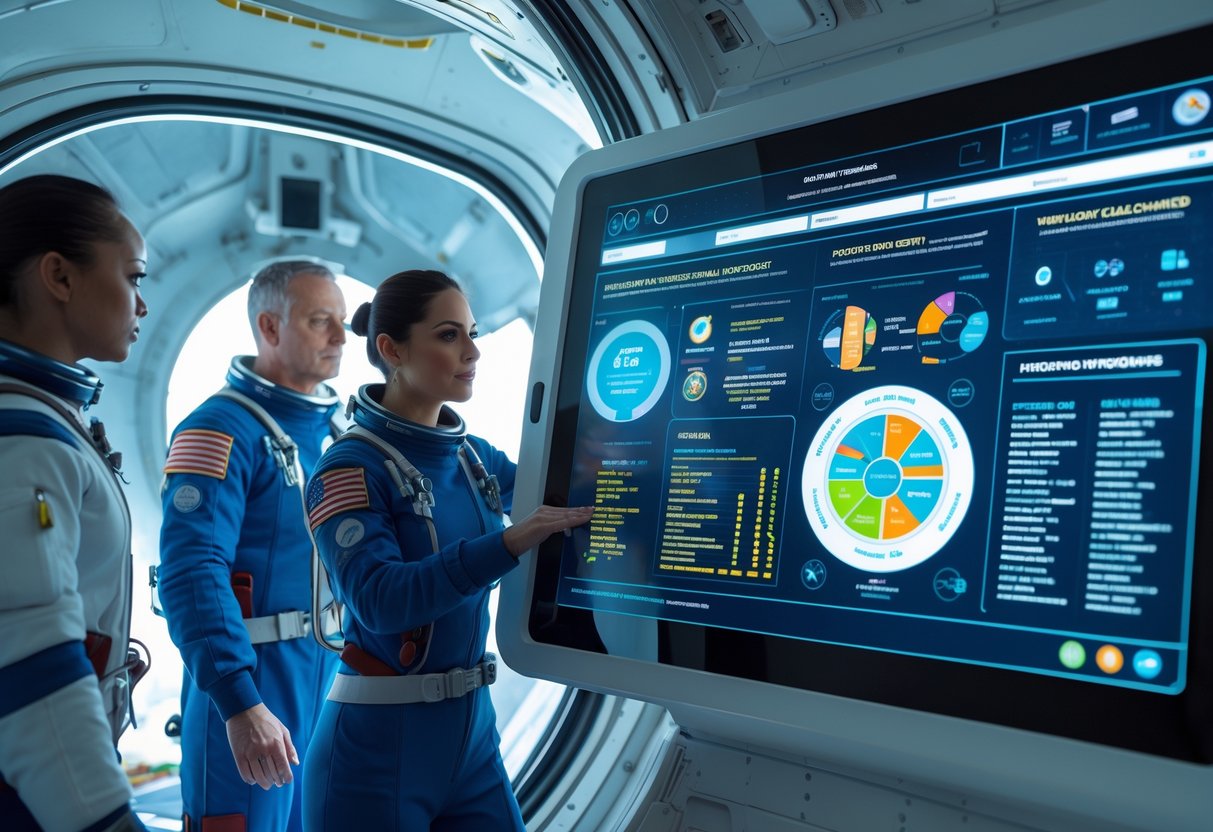
Space tourists usually have plenty of questions about nutrition, food safety, and meal planning before they fly.
People want to know everything from protein needs in microgravity to how food stays fresh on multi-day trips.
Space tourists actually need 20-30% more protein than on Earth to fight off muscle loss in microgravity.
That’s about 1.2 to 1.6 grams per kilogram of body weight every day.
Calcium requirements jump up to 1,200-1,500mg daily (compared to the usual 1,000mg). That extra calcium helps slow down bone density loss in weightlessness.
Carbs should make up 45-55% of calories, with a focus on complex carbs over simple sugars. Fats cover 25-35% of calories, and omega-3s are especially important for brain health.
B-vitamin needs rise 15-25% because of metabolic changes and stress. Antioxidant requirements also go up 20-40% to help counter extra oxidative stress from cosmic radiation.
Iron needs actually drop by 10-15% since microgravity changes how the body processes it. Too much iron can cause problems in space.
Space food comes in thermoformed trays with sealed compartments that keep meal parts separate.
Each package weighs about 300-500 grams and includes a balanced meal.
Multi-layer films block out oxygen and moisture, so food can last up to three years with no refrigeration.
The packaging holds up in temperatures from -20°F to 180°F.
Flexible pouches work for liquids and semi-solid foods like soups. They have one-way valves so you can eat directly without making floating messes.
All packaging has easy-open tabs or perforated edges for quick access. You won’t need sharp tools, which could be risky in zero gravity.
Vacuum-sealed containers protect food from radiation and temperature swings during space travel. The materials also resist punctures from utensils or rough handling.
Breakfast in space might be rehydrated scrambled eggs, dried fruit, coffee, and orange juice. Oatmeal with nuts and freeze-dried berries offers complex carbs and fiber.
Lunches often feature thermostabilized beef stew, crackers, dried peaches, and tea. Shrimp cocktail is surprisingly popular among space travelers for its texture and taste.
Dinner options include chicken teriyaki, rice pilaf, green beans, and chocolate pudding cake. These meals are designed to be balanced and comforting.
Space food systems rotate through an 11-day menu with over 200 food items to keep things interesting.
Spicy foods get more love in space because microgravity dulls taste buds by about 30%. Hot sauce and bold spices help bring the flavor back.
Freeze-drying takes out 98% of water but keeps nutrition and flavor intact.
Food gets frozen at very low temperatures, then vacuum pressure turns ice straight into vapor.
Thermostabilization uses heat to kill bacteria and enzymes. Foods are heated to 250°F for specific times, depending on acidity and container size.
Irradiation sterilizes some foods with gamma rays or electron beams to destroy pathogens. This extends shelf life without changing taste much.
Intermediate moisture foods keep enough water for taste but not enough for bacteria to grow. Think dried fruits, nuts, and certain meats.
All space foods go through tough microbiological testing before approval. Each batch has to meet NASA’s strict standards to keep everyone safe.
SpaceX Dragon and Northrop Grumman Cygnus cargo spacecraft deliver fresh food to the International Space Station. These missions usually show up about every three months.
Astronauts rely on pre-positioned food stores as backup nutrition for longer missions. The station keeps about 45-60 days of emergency rations just in case resupply gets delayed.
Whenever possible, cargo vehicles bring fresh produce along for the ride. Apples, oranges, and a few other fruits can really lift spirits and offer extra nutrients during those long flights.
Astronauts also grow some of their own food in space. They use hydroponic systems to produce leafy greens and herbs, which helps a lot on missions that last several months.
Mission planners work to keep nutrition consistent by coordinating multiple cargo deliveries. Automated resupply missions make sure crews don’t run out of food during their expeditions.
Doctors screen each astronaut for dietary restrictions before assigning flight roles. If someone has allergies, diabetes, or another condition, the team tailors their meal plan.
They try to honor cultural food preferences, as long as it’s safe. Crew members from different countries can ask for familiar foods, though chefs have to adapt these dishes for space.
The team keeps sodium intake under 2,000mg a day. That’s not easy, since preserved foods usually pack in a lot of salt.
Fiber matters a lot for digestion in microgravity. Planners add enough fiber, but they avoid foods that could cause too much gas.
Food choices affect morale, too. Comfort foods and special meals for holidays or milestones help astronauts deal with stress and the long stretches away from home.
